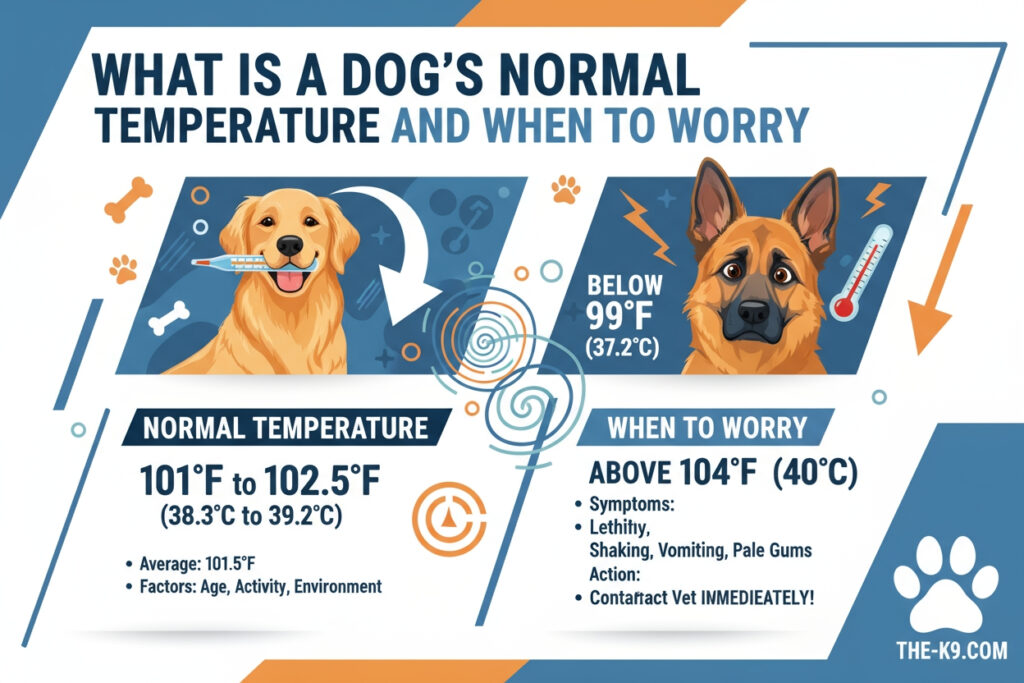

What Is a Dogs Normal Temperature is between 101°F and 102.5°F (38.3°C to 39.2°C). Anything above 103°F is considered a fever, and above 106°F is a veterinary emergency that needs immediate attention.
Knowing your dog’s normal body temperature is key to their health. The temperature range can vary based on breed, size, and individual traits. Using a digital thermometer gives the most accurate reading. Pet owners should watch for signs of temperature changes.
Dogs face unique challenges in regulating their temperature. Unlike humans, they only sweat on their paw pads. This limits their ability to cool down. So, it’s very important to keep an eye on their temperature to prevent health problems.
I learned just how quickly things can go wrong on a sweltering afternoon in Spain. A neighbour came running over in a panic — she’d been out walking her dog and he’d suddenly stopped moving. He was panting heavily, his gums looked off, and he was completely unresponsive to her calls. It was about 35°C outside and they’d been out longer than they should have been.
I’d seen heat exhaustion in dogs before during my time working with rescues out there, so I knew immediately what was happening. We got him into the shade, soaked him with water, and drove straight to the vet. Thankfully he made a full recovery — but it was close, and it was a reminder of how fast things can go wrong when a dog’s temperature gets out of control.

Knowing your dog’s normal temperature — and recognising when something’s wrong — can genuinely save their life.
Key Takeaways
- Dogs have a higher normal body temperature compared to humans
- Normal dog temperature ranges from 101°F to 102.5°F
- Breed and size can influence a dog’s body temperature
- Digital thermometers provide the most accurate temperature readings
- Sweat glands on paw pads limit dogs’ cooling mechanisms
- Understanding Dogs Normal Temperature Range
- Signs Your Dog May Have a Temperature Problem
- How to Accurately Measure Dogs Normal Temperature
- When High Temperature Becomes Dangerous
- Recognizing Signs of Fever in Dogs
- Understanding Dog Hypothermia and Low Temperature
- Safe Methods for Cooling Down an Overheated Dog
- Common Causes of Temperature Fluctuations in Dogs
- When to Seek Emergency Veterinary Care
- Prevention Tips for Temperature-Related Issues
- Essential Temperature Monitoring Tools for Dog Owners
- FAQ
Understanding Dogs Normal Temperature Range
Dogs have a body temperature that’s different from humans. Their healthy temperature is between 101.0 to 102.5°F (38.3 to 39.2°C). This is much higher than what humans have.
Knowing your dog’s normal temperature involves a few important things:
Temperature Differences Between Dogs and Humans
Humans usually have a body temperature of 98.6°F. Dogs, however, are naturally warmer. Their normal temperature is around 101.5°F, making them hotter than humans.
- Human average temperature: 98.6°F
- Dog normal temperature celsius: 38.6°C
- Dog normal temperature fahrenheit: 101.5°F
Factors Affecting Normal Temperature Variations
Several things can change a dog’s body temperature. These include:
- Age of the dog
- Activity level
- Environmental conditions
- Time of day
Breed-Specific Temperature Considerations
Different dog breeds can have slightly different normal temperatures. Smaller breeds tend to have slightly higher metabolic rates. This can affect their body temperature.
| Breed Size | Average Temperature | Temperature Variation |
|---|---|---|
| Small Breeds | 101.5-102°F | Slightly Higher |
| Large Breeds | 101-101.5°F | More Stable |
Checking your dog’s temperature often is key to their health. It helps catch any problems early.

Signs Your Dog May Have a Temperature Problem
KYou don’t always need a thermometer to suspect something’s wrong. These are the signs I look for first:
Signs of fever (temperature too high):
- Red or glassy-looking eyes
- Warm ears and nose
- Shivering or trembling
- Excessive panting
- Runny nose
- Lethargy or unusual tiredness
- Loss of appetite
- Vomiting
Signs of hypothermia (temperature too low):
- Violent, persistent shivering
- Muscle stiffness
- Weakness or stumbling
- Shallow breathing
- Pale or bluish gums
With the dog in Spain, the signs were sudden and dramatic — total collapse, heavy panting, glazed eyes. But often the early signs are subtler than that. A dog that’s just a bit quieter than usual, not finishing their food, or wanting to lie down more than normal can be worth a closer look, especially in extreme weather.
How to Accurately Measure Dogs Normal Temperature
TakinThe most reliable way to check is with a digital rectal thermometer designed for pets. I know it’s not the most comfortable procedure for anyone involved, but it’s genuinely the most accurate method.
Here’s how to do it:
- Apply a small amount of petroleum jelly to the tip of the thermometer
- Have someone gently hold your dog still — ideally in a calm, standing position
- Gently insert the thermometer about one inch into the rectum
- Hold in place until it beeps (usually 30–60 seconds)
- Clean thoroughly after use
Temperature reference guide:
| Temperature | What It Means |
|---|---|
| 99–102.5°F | Normal — all good |
| 103–104.5°F | Mild fever — monitor closely, call your vet |
| 105°F and above | Emergency — vet immediately |
| Below 99°F | Possible hypothermia — vet immediately |
A tip: stay calm while you do this. Dogs pick up on your anxiety, and a stressed dog is harder to keep still. If your dog genuinely won’t tolerate it, your vet can do it at a check-up and show you the technique.g your dog’s temperature needs the right tools and technique. It’s a key skill for pet owners to keep their pets healthy. Vets suggest specific ways for accurate readings.
Common Mistakes to Avoid
Here are mistakes to avoid when taking your dog’s temperature:
- Using human thermometers
- Attempting oral temperature measurement
- Forcing the thermometer
- Neglecting to lubricate the tip
Pro Tip: Always stay calm and gentle when checking temperature. If your dog seems stressed, get help from a vet for accurate readings.
When High Temperature Becomes Dangerous
Knowing about dog fever temperature is key for pet owners. A dog’s normal body temperature is between 101° to 102.5°F. But, if it goes over 103°F, it’s considered a fever. Temperatures above 106°F are very dangerous and can be life-threatening.
The critical stages of dog fever are divided into key temperature ranges:
- 101-102.5°F: Normal body temperature
- 103-105°F: Low-grade fever requiring monitoring
- 106°F and above: Dangerous fever zone
When a dog’s temperature gets into the dangerous zone, serious health risks appear. High temperatures can lead to:

- Cell damage
- Organ dysfunction
- Potential neurological complications
| Fever Level | Temperature Range | Recommended Action |
|---|---|---|
| Normal | 101-102.5°F | No intervention needed |
| Low-Grade Fever | 103-105°F | Monitor and consult veterinarian |
| High Fever | 106°F and above | Immediate veterinary emergency |
Never use human medications to lower a dog’s fever. Professional veterinary care is crucial when a dog’s fever temperature goes up. This is especially true if symptoms like shivering, panting, or vomiting happen with the high temperature.
Recognizing Signs of Fever in Dogs
Dog fever temperature is a key health sign that owners need to know. Spotting fever early can stop serious problems and get your dog the right care fast.
Dogs show fever in ways that are different from people. It’s important to watch for signs closely. A dog’s normal body temperature is between 101 to 102.5 degrees Fahrenheit. Any temperature over 103 F might mean they have a fever.
Physical Symptoms of Dog Fever
- Red or glassy-looking eyes
- Warm ears and nose
- Shivering or trembling
- Runny nose
- Warm to touch body areas
Behavioral Changes During Fever
Dogs with fever often act differently. These changes can mean they’re not feeling well:
- Decreased energy levels
- Loss of appetite
- Increased panting
- Unusual lethargy
- Potential vomiting
Important: Always use a veterinary rectal thermometer for accurate temperature measurement, as traditional methods like checking nose temperature are unreliable.
| Temperature Range | Potential Indication | Recommended Action |
|---|---|---|
| 101-102.5°F | Normal | Regular monitoring |
| 103-105°F | Mild Fever | Veterinary consultation |
| 106°F and above | High Fever | Immediate veterinary emergency |
If you’re unsure about your dog’s fever, talk to a vet. They can make sure your dog is healthy and safe.
Understanding Dog Hypothermia and Low Temperature
Dog hypothermia symptoms can be subtle but dangerous. When a dog’s body temperature drops below 99°F, their health becomes critically vulnerable. Knowing these symptoms can help pet owners protect their furry friends from cold-weather risks.
Dogs usually keep their body temperature between 100.5-102.5°F. Hypothermia occurs when their temperature falls below 98°F, leading to serious health issues. Some dogs are more at risk, including:
- Puppies
- Senior dogs
- Small breed dogs
- Dogs with short or thin coats
It’s important to recognize dog hypothermia symptoms early. Early signs include:
- Persistent shivering
- Muscle stiffness
- Lethargy
- Decreased mental awareness
| Hypothermia Level | Temperature Range | Symptoms |
|---|---|---|
| Mild | 90-99°F | Shivering, mild confusion |
| Moderate | 82-90°F | Muscle stiffness, reduced response |
| Severe | Below 82°F | Loss of consciousness, potential coma |
As hypothermia gets worse, dogs may show more severe symptoms. These include collapsed breathing, dilated pupils, and even organ failure. Quick action by a vet is key to saving their life.
Safe Methods for Cooling Down an Overheated Dog
Knowing how to cool down an overheated dog is crucial. A dog’s body temperature should be between 101 to 102.5 degrees Fahrenheit. But, when it This is exactly what we did with the dog in Spain, and it worked. The key is to cool gradually — not with ice or freezing cold water, which can cause shock.
What to do:
- Move them immediately to shade or a cool indoor space
- Offer small amounts of cool (not cold) water to drink
- Apply lukewarm wet towels to their neck, armpits, and groin area — areas where blood vessels are close to the surface
- Use a fan if one is available
- Drive to the vet — even if they seem to be improving
What not to do:
- Don’t use ice or ice-cold water
- Don’t force them to drink
- Don’t assume they’re fine because they’ve stopped panting
In the case I mentioned, we used wet towels and got moving to the vet right away. Don’t wait to see if they improve on their own when temperatures are dangerously high.
Common Causes of Temperature Fluctuations in Dogs
It’s important for pet owners to know what can affect a dog’s temperature. Dogs can have temperature changes due to many things inside and outside of them. It’s key to watch these changes closely.
Several key factors can trigger temperature fluctuations in dogs:
- Infections (bacterial, viral, and fungal)
- Environmental conditions
- Stress and anxiety
- Hormonal changes
- Medication side effects
Dogs can have different health issues that affect their temperature. Infections are a big reason for temperature changes. These can include:
- Ear infections
- Urinary tract infections
- Tooth abscesses
- Infected wounds
| Temperature Range | Potential Cause | Recommended Action |
|---|---|---|
| 99.5°F – 102.5°F | Normal Range | Regular monitoring |
| 103.5°F – 104.5°F | Potential Fever | Veterinary consultation |
| Above 105°F | High Fever | Immediate medical attention |
Things like extreme weather, stress, or too much exercise can cause a dog’s temperature to change. Owners should watch for any lasting or sudden changes. These could mean there’s a health problem.
When to Seek Emergency Veterinary Care
Dog owners need to watch their pets closely. Knowing when to get help fast can save a dog’s life. It’s key to know about dog fever and hypothermia signs.
Critical Temperature Thresholds
Dogs usually have a body temperature between 100.5 and 102.5 degrees Fahrenheit. Some temperatures mean you need to get help right away:
- Temperatures above 104°F need immediate vet care
- Temperatures at 106°F or higher are very serious
- Temperatures below 99°F might mean hypothermia
Emergency Response Steps
Act fast if your dog shows scary symptoms. Here are signs that mean you should get vet help fast:
| Symptom | Emergency Indicator |
|---|---|
| Respiratory Rate | Over 60 breaths per minute while resting |
| Heart Rate | Over 160 beats per minute |
| Gum Color | Pale, blue, or purple |
| Vomiting | More than 2-3 times consecutively |
If your dog shows these signs and has an odd temperature, call your vet right away. Quick action can stop serious problems.
Additional Emergency Warning Signs
- Seizures lasting more than 2-3 minutes
- Sudden collapse or extreme lethargy
- Persistent non-productive retching
- Signs of significant trauma or bleeding
If you’re unsure, always ask a vet. Your fast action could save your dog’s life.
Prevention Tips for Temperature-Related Issues
Keeping your dog’s temperature healthy is all about being proactive and watching them closely. Dogs can easily get too hot or too cold, so it’s key to prevent these issues.
To keep your dog safe from temperature-related problems, follow these steps:
- Watch the weather closely
- Make sure they always have fresh water
- Give them cozy places to rest
- Use the right ways to cool or warm them
Some dog breeds are more at risk because of their body shape. Brachycephalic breeds like Bulldogs and Pugs have a hard time with heat. Their face shape makes it hard for them to cool down.
To protect your dog from the heat in summer, do the following:
- Stay indoors during the hottest part of the day
- Use cooling mats or vests
- Make sure they have a cool place to rest
- Never leave them in a car
In winter, you need to take different steps:
- Put dog sweaters on short-haired dogs
- Keep them inside when it’s very cold
- Use booties to protect their paws
- Make a warm spot for them to rest
Regular vet visits are important to catch any temperature-related health problems early. Knowing what your dog needs helps keep them safe and comfortable in all kinds of weather.
| Season | Temperature Risk | Prevention Tactic |
|---|---|---|
| Summer | Heat Stroke | Hydration, Shade, Cool Areas |
| Winter | Hypothermia | Warm Clothing, Limited Exposure |
Essential Temperature Monitoring Tools for Dog Owners
Choosing the right tools is key when checking a dog’s temperature. Digital rectal thermometers are the most reliable. Brands like Microlife and Veridian offer top-notch thermometers for pets. They give quick and precise readings in 30 to 60 seconds.
There are also modern alternatives for monitoring temperature. Non-contact infrared thermometers, like the Pet-Temp, are less invasive. Ear thermometers, such as the Braun ThermoScan, are also available. Yet, they might not be as accurate as rectal thermometers, especially for dogs with ear infections or thick fur.
Dog owners should also consider other temperature management tools. Cooling mats from The Green Pet Shop and smart devices for temperature monitoring are helpful. Professional-grade devices, like the Mella Smart Thermometer, can send data to vets. This makes tracking your dog’s health easier and more precise.
Always have a reliable digital thermometer in your pet first-aid kit. Learn how to take a dog’s temperature correctly with your vet’s help. Remember, accurate temperature monitoring is crucial for catching health issues early. Quality tools can greatly improve your dog’s health and comfort.
FAQ
What is a dog’s normal body temperature?
How can I tell if my dog has a fever?
What temperature is considered a fever in dogs?
How do I take my dog’s temperature?
What are the signs of hypothermia in dogs?
Can different dog breeds have different normal temperatures?
What should I do if my dog’s temperature is too high?
How can I prevent temperature-related health issues in my dog?
What type of thermometer is best for dogs?
When should I seek emergency veterinary care for temperature issues?

Christian has been surrounded by dogs his entire life, growing up on a farm where the pack ranged from scrappy Jack Russells to towering Irish Wolfhounds. That early education — learning to read a dog’s temperament before he could drive a car — shaped everything. Since then he’s trained dozens of dogs in recall and obedience, and spent time working alongside shelters helping rehome and rehabilitate dogs that most people had written off. He started The K9 because good dog information shouldn’t be hard to find.