
Emotional response, communication or sent dispersal ?Why Dogs Wag Their Tails. A recent study found 76% of pet owners misinterpret their dog’s tail movements – often assuming happiness when caution or uncertainty is being signalled. This common misunderstanding reveals how little we truly grasp about our furry companions’ primary communication tool.
Animal behaviorist Nicholas Dodman compares tail motions to a “nonverbal semaphore system” used across canine social interactions. While a loose, sweeping motion might indicate friendliness, rapid twitches could signal tension. The position relative to the body matters too – high carriage often shows confidence, while low tucks suggest submission.
Three key insights emerge from decades of research:
• Tail language varies by breed and individual
• Speed and direction provide crucial context clues

• Combined with ear position and posture, it forms a complete emotional picture
Contrary to popular belief, there’s no universal “happy dog” tail wag. Shelter workers report nervous animals wagging tails during stressful encounters, while service dogs use precise movements to communicate complex needs. Even the tail’s side-to-side bias carries meaning – right-leaning swings often correlate with positive emotions.
This exploration will decode tail mechanics from multiple angles:
• Evolutionary origins of wagging behavior
• Modern scientific interpretations
• Practical tips for better human-canine understanding
By examining tail signals through biological and behavioral lenses, we gain unprecedented insight into our pets’ rich emotional lives.

Understanding Why Do Dogs Wag Their Tails
Research reveals that canine tail motions function as a complex vocabulary. Unlike human speech, these movements combine speed, height, and direction to share feelings. Dr. Stanley Coren compares this system to “a living emoji system” – where every twirl and tilt carries distinct meaning.
Decoding the Tail Alphabet
A high, stiff tail often signals alertness or confidence, much like humans standing tall during introductions. Conversely, a low tuck suggests unease – similar to someone avoiding eye contact. Studies show a right-side wagging bias frequently matches positive emotions, while left-leaning motions may indicate wariness.
| Tail Position/Movement | Emotional State | Human Equivalent |
|---|---|---|
| High & Still | Alert/Confidence | Standing Tall |
| Low Tuck | Fear/Submission | Slumped Shoulders |
| Right-Side Bias | Positive Feelings | Smiling |
| Rapid Twitches | Tension/Uncertainty | Fidgeting |

Beyond the Wag: Full-Body Context
Effective interpretation requires observing multiple signals. A wagging tail paired with relaxed ears and soft eyes differs greatly from one accompanied by raised hackles. Animal experts recommend watching for:
- Tail height relative to spine
- Swinging pattern consistency
- Muscle tension in hindquarters
This multisensory approach helps prevent misreading intentions. Shelter workers note that stressed pets sometimes wag tails during vet visits – a reminder that context shapes meaning.
The Science and Evolution Behind Why do dogs wag their tails?
Scientists have uncovered fascinating links between tail motions and canine evolution. Domesticated pups developed this unique communication method over thousands of years, transforming simple movements into a nuanced language.
The Role of Domestication and Genetics
A groundbreaking study on silver foxes revealed how selective breeding changed animal behavior. Over generations, friendly foxes developed curly tails and frequent wagging – traits now common in many dog breeds. This suggests wagging became a genetic trademark through human interaction.
Brain Lateralization and Directional Bias
Research shows tail swings often match brain hemisphere activity. Right-leaning wags correlate with positive emotions processed in the left brain. This lateralization helps explain why puppies show wagging preferences as early as six weeks old.
| Wag Direction | Brain Hemisphere | Common Triggers |
|---|---|---|
| Right-Side | Left | Familiar people, treats |
| Left-Side | Right | Unfamiliar animals, loud noises |
| Neutral | Balanced | Curiosity, mild interest |
Historical Perspectives
Ancient cave art depicts early dogs using tail positions during hunts. Modern breeds retain these ancestral movement patterns, proving this communication method remains vital today. Ongoing studies continue exploring how tail language helped shape human-canine bonds.
Interpreting Your Dog’s Body Language Cues
Imagine coming home to a pup whose entire body seems to speak – from nose wiggles to toe taps. While tail motions grab attention, true understanding comes from reading the full physical narrative.
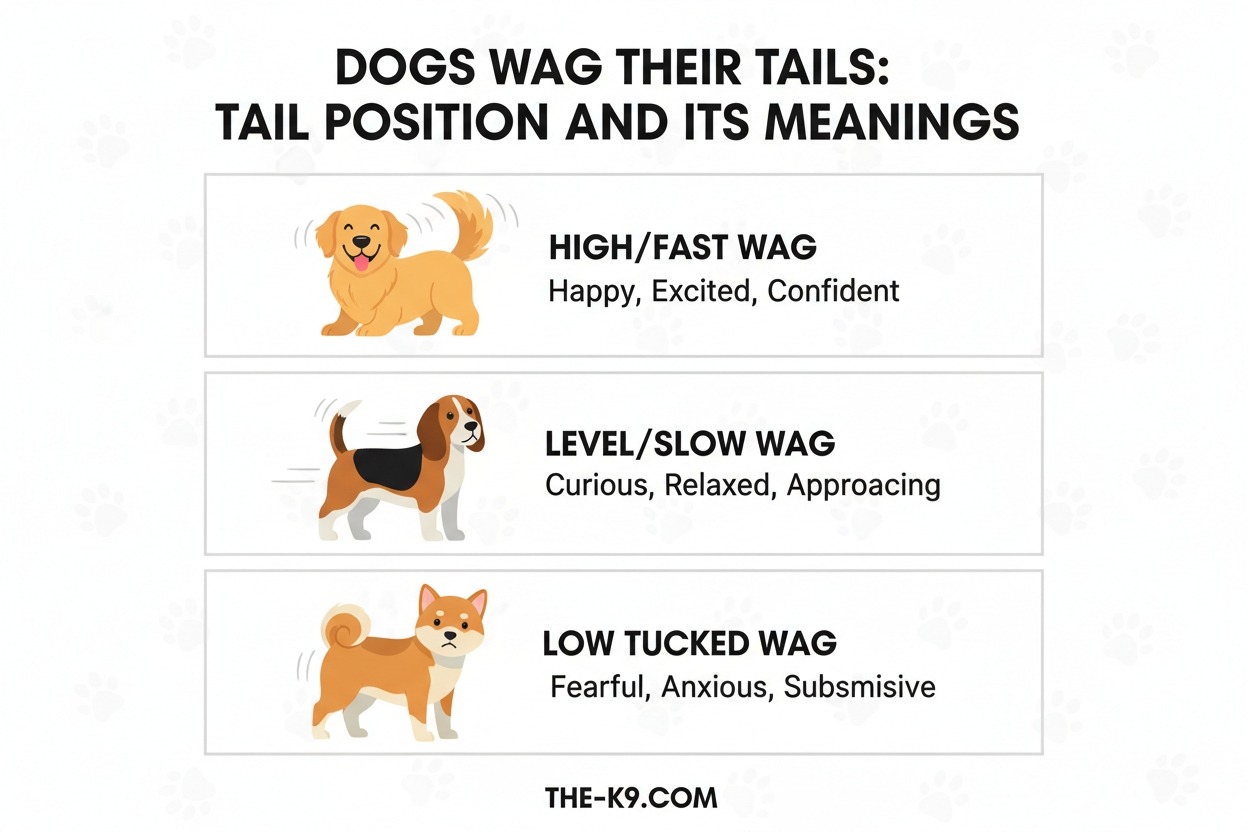
Tail Position and Its Meanings
A tail’s position acts like a mood compass. High carriage often signals confidence, while a low tuck suggests nervousness. But breed norms matter – a curled Spitz tail at rest differs from a straight Greyhound’s.
- High & Still: Alertness (common during play or new encounters)
- Mid-Level: Contentment (typical relaxed state)
- Low Tuck: Anxiety (seen during storms or vet visits)
A 2022 University of Bari study found dogs with consistently high tail positions had 23% higher serotonin levels. Yet a wagging tail alone doesn’t guarantee joy – observe the base height first.
Complementary Signals from Ears, Eyes, and Posture
True emotional decoding requires a head-to-tail scan. Watch for these combinations:
| Body Part | Relaxed State | Stressed State |
|---|---|---|
| Ears | Softly folded back | Pinned flat |
| Eyes | Soft gaze | Whale eye (white showing) |
| Posture | Weight evenly distributed | Crouched/low |
Remember: A dog happy to see you combines loose tail wags with wiggly hips and relaxed facial muscles. Nervous pets might wag stiffly while leaning away. Always compare behaviors to your pup’s normal baseline – individual quirks matter as much as breed tendencies.

Final Insights on Why do dogs wag their tails?
Our exploration of tail motions reveals a fascinating blend of instinct and learned behavior. Genetic factors shape basic movements, while daily interactions refine this language. By understanding these nuances, owners gain a powerful way to decode their pet’s emotional world.
Accurate interpretation requires looking beyond isolated signals. A tail’s position combines with ear orientation and overall mood to paint a complete picture. This holistic approach helps prevent misreading signs of anxiety as excitement – a common issue in human-canine interactions.
Ongoing studies continue uncovering new layers of tail communication. Recent findings suggest breed-specific dialects and right-side biases in positive exchanges. These discoveries offer fresh ways to strengthen bonds through informed observation.
Curiosity remains key. Asking questions about your pet’s unique patterns builds trust and safety. Remember: each flick and sweep holds meaning waiting to be understood. With attention to detail, we transform simple motions into meaningful conversations.
By honoring this silent way of connecting, we nurture deeper relationships with our four-legged companions. Every tail tells a story – learning its vocabulary lets us become better listeners in life’s shared journey.
FAQ
Can tail movement indicate anxiety or stress?
Do certain breeds communicate differently through their tails?
Why do puppies start wagging earlier than other behaviors?
Does wagging direction have a scientific meaning?
How do dogs use tails alongside other body language?
Can humans influence how dogs wag their tails?
Amanda grew up with dogs underfoot her entire life and hasn’t been without one since. She’s been volunteering at her local shelter for 20 years, having fostered over 30 dogs — and only accidentally kept three of them. She writes about adoption, dog behaviour, and the beautiful chaos of sharing your sofa with a dog who was “supposed to be temporary.