

Dogs eat grass because it’s a completely normal behaviour rooted in instinct — but it can also be a sign that something’s off with their stomach. Most of the time it’s nothing to worry about, but it’s worth understanding why they do it so you know when to pay attention and when to relax.
I’ve owned dogs my whole life, from working farm dogs to rescues, and grass eating is something I’ve seen constantly. My own dogs do it regularly — and yes, it’s usually followed by that familiar retching sound on the kitchen floor at the worst possible moment.
Is It Normal for Dogs to Eat Grass?
Yes, completely. Studies suggest that grass eating is one of the most common behaviours in domestic dogs. A survey published in the journal Applied Animal Behaviour Science found that the majority of dog owners reported their dogs eating grass regularly, and that most of those dogs showed no signs of illness beforehand.
So if your dog grazes on the lawn occasionally, you’re not alone and your dog almost certainly isn’t ill. It’s a normal, instinctive behaviour that goes back long before dogs became pets.
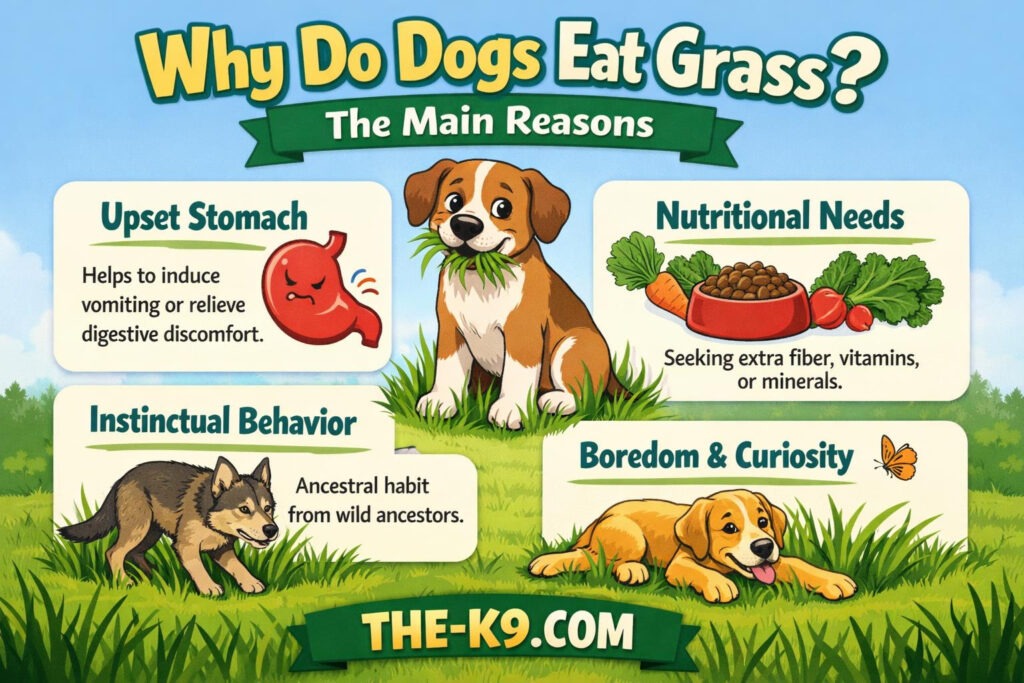
Why Do Dogs Eat Grass? The Main Reasons
1. To Settle an Upset Stomach
This is the most common explanation and the one most owners assume. Dogs may eat grass when they feel nauseous because the fibrous blades tickle the throat and stomach lining, triggering vomiting and providing relief.

My dogs definitely do this. You can usually tell — they’ll head straight for the longest, toughest grass they can find, eat it quickly and in large amounts, and then vomit shortly after. It looks deliberate, because it probably is.
That said, research suggests that less than 25% of dogs actually vomit after eating grass, which means it’s not always about an upset stomach.
2. Instinct and Natural Behaviour
Wild dogs and wolves eat grass too. Their ancestors were opportunistic omnivores who ate whatever was available — including plant matter. Grass eating may simply be a deeply ingrained instinct that domestic dogs have never lost.
Some researchers believe wild canids ate grass to help expel intestinal parasites. The fibrous material would bulk up the digestive tract and help move things along. Your dog doesn’t have worms every time they eat grass — but their instincts don’t necessarily know that.
3. They Like the Taste
This one surprises people but it’s true — some dogs just enjoy eating grass, particularly in spring when it’s fresh and sweet. If your dog eats grass slowly and contentedly without vomiting, there’s a good chance they simply like it. Dogs that graze calmly and show no signs of distress before or after are almost certainly eating it for pleasure rather than necessity.
4. Nutritional Deficiency
Some dogs eat grass because they’re lacking fibre or certain nutrients in their diet. Grass contains fibre, chlorophyll, and various trace nutrients. If your dog has recently started eating grass much more frequently than usual, it might be worth reviewing their diet.
Switching to a higher fibre food or adding a small amount of cooked vegetables to their meals can sometimes reduce grass eating noticeably. Here are some safe, fibre-rich foods you can add to your dog’s diet:

| Food | Fibre Content (per 100g) |
|---|---|
| Sweet Potatoes | 3.0g |
| Carrots | 2.8g |
| Broccoli | 2.6g |
| Apple | 2.4g |
| Blueberries | 2.4g |
| Pumpkin | 2.0g |
Introduce any new food gradually and in small amounts — sudden dietary changes can upset your dog’s stomach even when the food itself is perfectly safe.
5. Boredom or Anxiety
Dogs that don’t get enough mental stimulation or exercise sometimes eat grass simply because they have nothing better to do. If your dog tends to eat grass more when left alone in the garden, boredom could be the cause.
This is more common in intelligent, high-energy breeds. More exercise, enrichment activities, and time with you will usually reduce it.

When Should You Be Concerned?
Occasional grass eating followed by vomiting is normal. But there are situations where it warrants a vet call:
- Your dog is eating grass obsessively and vomiting repeatedly
- There’s blood in the vomit
- Your dog seems lethargic, in pain, or is refusing food alongside the grass eating
- The behaviour has started suddenly after years of not doing it
- Your dog is eating grass at night or in unusual amounts
| Symptom | Possible Cause |
|---|---|
| Vomiting | Gastrointestinal disorder or dietary issue |
| Diarrhea | Malabsorption or digestive disturbance |
| Lethargy or weakness | Underlying illness or dietary deficiency |
| Loss of appetite | Digestive system disturbance |
| Abdominal pain or discomfort | Intestinal blockage or inflammation |
Any sudden change in behaviour is worth noting. If your dog has always grazed occasionally and continues to do so, that’s almost certainly fine. If it’s new and accompanied by any of the symptoms above, get it checked.
Is Grass Safe for Dogs to Eat?
Generally yes — but with important caveats.
Watch out for:
- Pesticides and herbicides — treated lawns are dangerous. If your garden or a nearby field has been sprayed, keep your dog away from the grass until it’s safe
- Toxic plants nearby — dogs don’t always discriminate between grass and the plants growing around it. Make sure your garden doesn’t have anything toxic like foxglove, yew, or ragwort growing alongside the grass
- Fertilisers — freshly fertilised grass can cause stomach upset or worse depending on the product used
Your own lawn is generally the safest option. Be cautious about letting your dog graze in parks, verges, or fields you don’t know, where chemicals may have been used.
How to Reduce Grass Eating if It’s Becoming a Problem
If the grass eating is excessive or you’re worried about what your dog might be ingesting outside, here are a few things that can help:
Review their diet — increase fibre by adding cooked carrots, green beans, or pumpkin to their meals. Sometimes that’s all it takes.
Increase exercise and mental stimulation — a tired dog is less likely to graze out of boredom. Puzzle feeders, scent games, and longer walks all help.
Grow a patch of dog-safe herbs — some owners grow a small patch of wheatgrass or dog-safe herbs specifically for their dogs to nibble. It satisfies the instinct safely.
Train a “leave it” command — if your dog is eating grass in risky environments like treated parks or verges, a solid “leave it” is worth teaching.

The Bottom Line
Dogs eat grass because they’re dogs — it’s instinctive, mostly harmless, and incredibly common. The occasional vomit on the carpet is unpleasant but not a red flag. The times to pay attention are when the behaviour is obsessive, sudden, or accompanied by other symptoms.
I’ve long since made my peace with finding grass-laden sick on the floor from time to time. It comes with the territory. The main thing is knowing your dog’s normal — and knowing when something feels different.
In most cases no — it’s a natural behaviour and generally harmless. The exception is if the grass may have been treated with chemicals, or if your dog is eating it obsessively.
They’re likely using it to relieve an upset stomach. The grass irritates the stomach lining and triggers vomiting, which provides relief. It’s unpleasant to watch but usually a sign your dog is self-regulating.
The grass itself is unlikely to cause illness. The risk comes from what’s on the grass — pesticides, herbicides, fertilisers, or toxic plants nearby
It can, particularly if the behaviour is new or very frequent. Try increasing fibre in their diet and see if it reduces. If it doesn’t, a vet chat is worthwhile.

Christian has been surrounded by dogs his entire life, growing up on a farm where the pack ranged from scrappy Jack Russells to towering Irish Wolfhounds. That early education — learning to read a dog’s temperament before he could drive a car — shaped everything. Since then he’s trained dozens of dogs in recall and obedience, and spent time working alongside shelters helping rehome and rehabilitate dogs that most people had written off. He started The K9 because good dog information shouldn’t be hard to find.